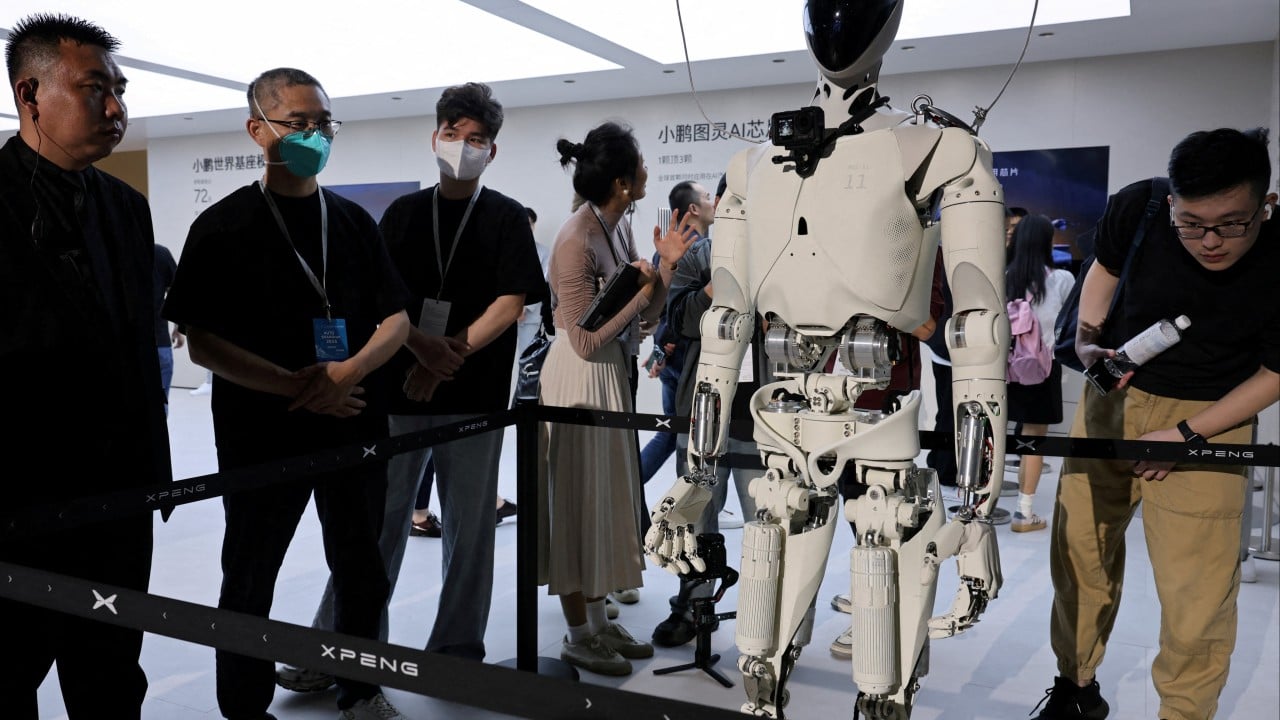
Xpeng's robotics subsidiary, Dogotix, has secured US$900 million in funding to compete in the global market for humanoid robots and embodied artificial intelligence.
Key facts
- •Dogotix is now valued at US$6.3 billion following its latest funding round.
- •The US$900 million investment is the largest single private-equity deal for a Chinese robotics firm.
- •Investors in the round include Alibaba, Tencent, IDG Capital, and Gaorong Ventures.
- •Xpeng reported a second-quarter net loss of 1.34 billion yuan, up 179 per cent year-on-year.
- •Research and development costs for Xpeng increased by 32.1 per cent in the second quarter.
Chinese electric vehicle manufacturer Xpeng has raised US$900 million for its robotics subsidiary, Dogotix. The funding round, which values the unit at US$6.3 billion, marks the largest private-equity deal for a Chinese robotics company to date. The capital is intended to support Xpeng's efforts to develop humanoid robots and compete with Tesla in the field of embodied artificial intelligence.
By the numbers
Funding and Strategic Goals
The financing round included contributions from major investors such as Alibaba Group Holding, Tencent Holdings, IDG Capital, and Gaorong Ventures, who collectively invested US$600 million. Xpeng contributed an additional US$200 million to the round. CEO He Xiaopeng stated that the company aims to become a global leader in physical AI and drive the commercialization of general-purpose humanoid robots and autonomous driving technologies.
Financial Performance
The fundraising announcement coincided with Xpeng's second-quarter financial report, which showed a net loss of 1.34 billion yuan (US$199.4 million) for the period ending in June. This represents a 179 per cent increase in losses compared to the previous year. The company attributed the higher costs in part to a 32.1 per cent rise in research and development spending, even as total revenue grew 8 per cent to 19.7 billion yuan.
Advertisement
This article was independently rewritten by ManyPress editorial AI from reporting originally published by SCMP Business.