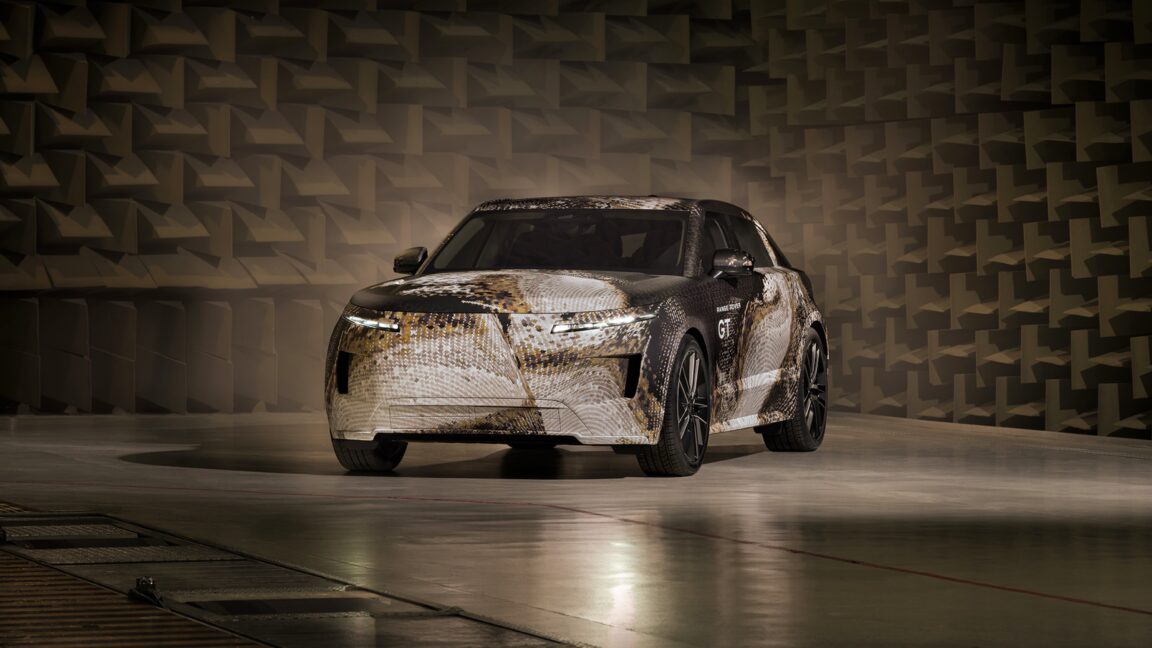
Range Rover has unveiled plans for its first grand tourer, an all-electric vehicle built on the company's Electrified Modular Architecture, set to launch in 2027.

Key facts
- •The Range Rover GT is the fifth vehicle in the brand's lineup.
- •It is built on the Electrified Modular Architecture (EMA) platform.
- •The vehicle will be manufactured at the Halewood plant in the UK.
- •The GT will launch as an electric vehicle, with hybrid options planned for later.
- •The interior design utilizes touchscreens for all controls, omitting physical buttons.
Range Rover has confirmed the development of the Range Rover GT, an all-electric grand tourer that represents a departure from the brand's traditional SUV lineup. The vehicle is built on JLR's Electrified Modular Architecture (EMA) and is scheduled for release in 2027. While the company has released images of camouflaged prototypes, specific details regarding pricing, power, and range remain undisclosed.
Design and Interior Features
The GT features a sleek, coupé-like silhouette that deviates from standard SUV proportions. Inside, the cabin is designed with a minimalist aesthetic, featuring a wide driver display, a large central screen, and a panoramic roof. Notably, the vehicle lacks physical switchgear, relying entirely on touchscreens for controls, including climate settings. The interior also incorporates hidden speakers and a concealed air vent running across the dashboard.
Platform and Market Positioning
The GT will be manufactured at JLR's Halewood plant in the UK using the EMA platform, which will also support future models like the electric Range Rover Velar successor and the 'Baby Defender.' While the GT is launching as an all-electric vehicle, Range Rover plans to introduce hybrid options later in its lifecycle. The company maintains that the GT is distinct from the upcoming Jaguar Type 01, emphasizing that the Range Rover model retains all-terrain capability.
Advertisement
This article was independently rewritten by ManyPress editorial AI from reporting originally published by Wired.