
Chinese humanoid robot manufacturer Unitree Robotics saw its shares rise over 600% during its initial public offering on the Shanghai Star Market.
Key facts
- •Unitree Robotics shares opened at 1,100 yuan, far above the 150.8 yuan offer price.
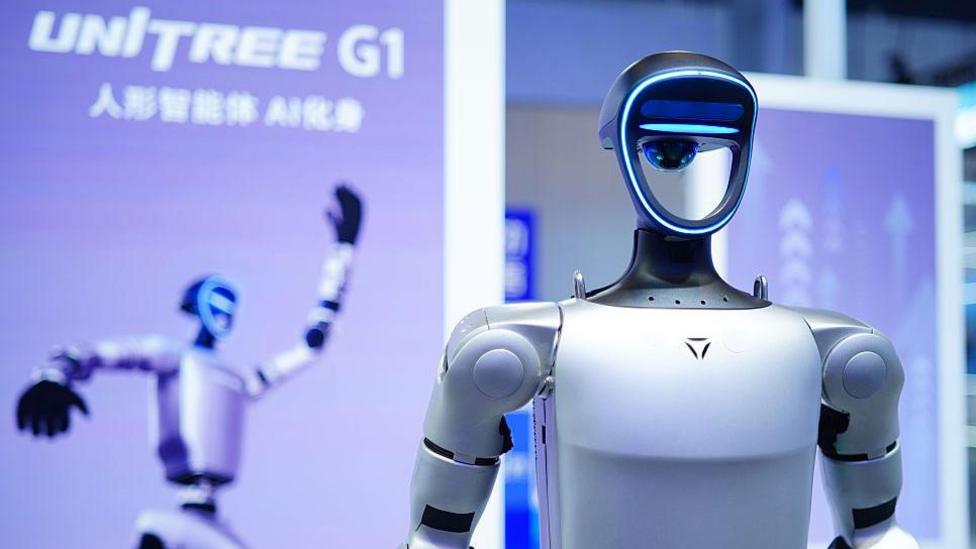
- •The company has been selling humanoid robots since 2023, including the G1 model.
- •The US government announced a ban on new Chinese-made humanoid and quadruped robots in July.
- •Unitree's robots are currently competing in the 2026 World Humanoid Robot Games in Beijing.
- •The number of Chinese robotics firms increased more than threefold between 2020 and 2024.
Unitree Robotics, a leading Chinese humanoid robot maker, saw its shares soar by more than 600% during its stock market debut in Shanghai on Wednesday. The company's shares opened at 1,100 yuan, significantly exceeding the initial offer price of 150.8 yuan. This listing on the tech-focused Star Market represents a major milestone for China's ambitions to lead the global robotics and artificial intelligence industry.
By the numbers
Industry Growth and Government Support
Based in Hangzhou, Unitree has become a prominent player in the robotics sector since its founding in 2016. The company benefits from a regional 'golden cluster' of robotics firms supported by significant government investment. According to state-run China Daily, the number of Chinese robotics companies more than tripled between 2020 and 2024. Experts suggest this growth is partly driven by the need to address labor shortages caused by China's aging population.
Competitive Landscape and Market Challenges
Unitree faces competition from both domestic and international rivals, including US-based firms like Tesla, Amazon, and Boston Dynamics. While US robots are noted for user-friendly software, Chinese manufacturers are often favored for their lower pricing. For instance, Unitree's robot dogs start at $2,700, compared to approximately $70,000 for Boston Dynamics' Spot. However, some researchers caution that widespread adoption in homes remains years away, citing technical hurdles such as battery life, reliability, and privacy concerns.
Geopolitical Tensions and Trade
Robotics has become a central point of competition between the US and China. In July, the US administration announced a ban on new Chinese-made humanoid and quadruped robots, citing national security and manufacturing protection concerns. Beijing has rejected these claims, accusing the US of politicizing trade. Despite these tensions, analysts note that Chinese firms remain deeply embedded in global manufacturing, making it difficult for other nations to reduce reliance on their technology.
Advertisement
This article was independently rewritten by ManyPress editorial AI from reporting originally published by BBC Technology.


