
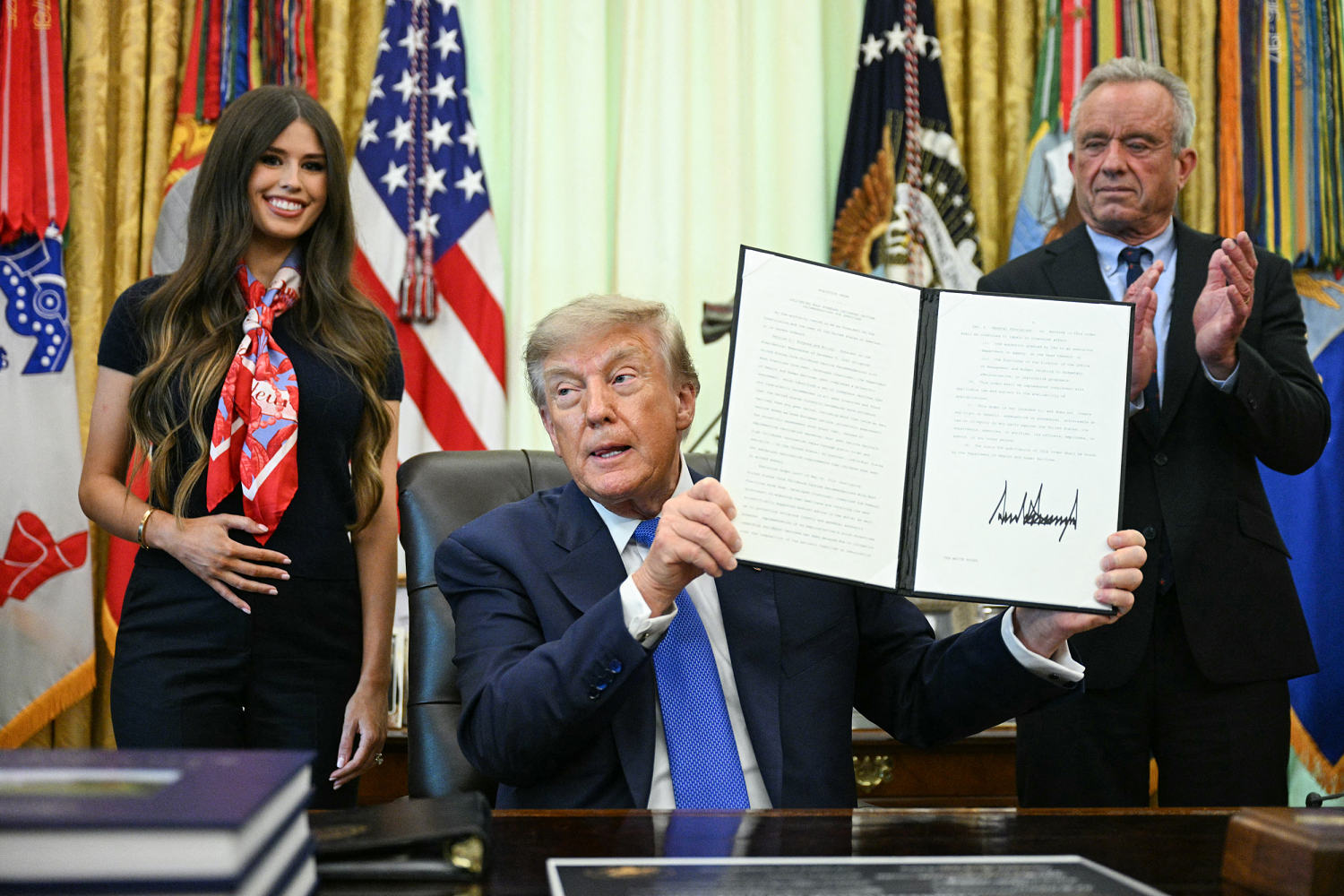
President Trump issued an executive order aiming to reduce the number of universally recommended childhood vaccines from 18 to 11, following a similar proposal by Robert F. Kennedy Jr.
Key facts
- •The executive order aims to reduce the number of universally recommended childhood vaccines from 18 to 11.
- •The order proposes separating the combined MMR vaccine into three individual shots, which are not currently available.
- •The administration stated the changes are intended to provide parents with more choices rather than prohibiting access to vaccines.
- •Decades of research have shown no link between vaccines and autism, despite the president's stated concerns.
- •The combined MMR vaccine has been in use since 1971 to reduce the total number of injections required for children.
President Donald Trump issued an executive order on Monday seeking to decrease the number of universally recommended childhood vaccines from 18 to 11. The order aligns with a previous proposal by Health Secretary Robert F. Kennedy Jr. that remains blocked by court challenges. The administration stated the move is intended to provide parents with more choices regarding immunization schedules.
By the numbers
Proposed Changes to Vaccination Schedules
The executive order recommends that vaccines not included in the new 11-disease list be subject to shared clinical decision-making between parents and doctors. Additionally, the order calls for childhood immunizations to be administered during separate medical visits. It also proposes separating the combined measles, mumps, and rubella (MMR) vaccine into three individual shots, though no such individual vaccines are currently FDA-approved or available.
Administration Rationale and Context
President Trump linked the proposed changes to concerns regarding rising autism rates in the U.S., stating that the reduction is part of research efforts to improve vaccine recommendations. Heidi Overton, deputy assistant to the president for domestic policy, described the order as a way to correct the legal impasse surrounding Kennedy’s earlier overhaul. The administration aims to align U.S. recommendations with those of other developed nations, such as Denmark, though public health experts note differences in disease burden and healthcare systems between the countries.
Advertisement
This article was independently rewritten by ManyPress editorial AI from reporting originally published by NBC Politics.