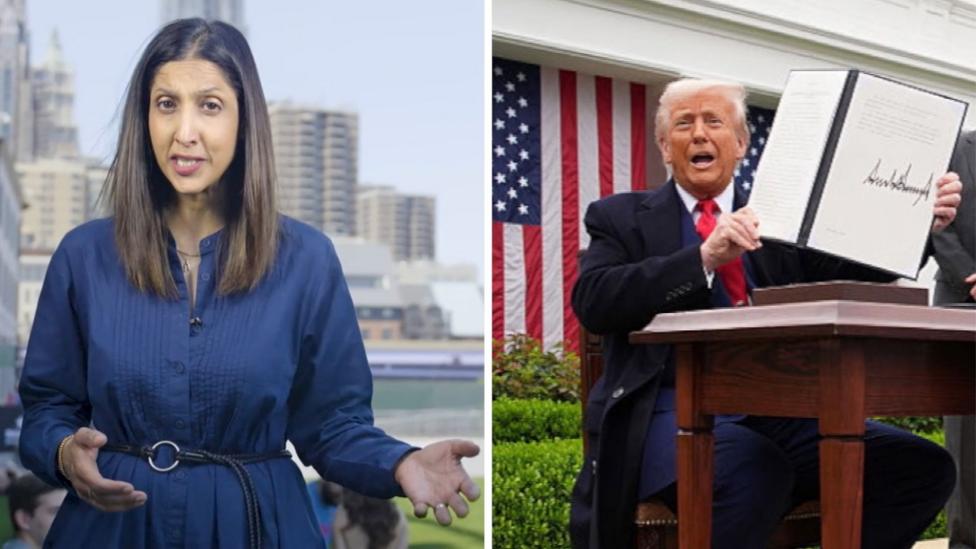
The US has introduced new tariffs on 60 economies, citing failures to enforce prohibitions against goods produced with forced labor.

Key facts
- •The tariffs cover more than 99% of US imports.
- •The new measures took effect at midnight Eastern Standard Time on Friday, July 24.
- •The administration is using Section 301 of the Trade Act of 1974 to implement the tariffs.
- •The EU is scheduled to introduce its own strict import ban on forced-labor goods in December 2027.
- •Exemptions include steel, aluminum, automobiles, civilian aircraft, and rare earth minerals.
The Trump administration announced new tariffs on 60 economies, including the European Union, on Thursday. The United States Trade Representative (USTR) stated the move follows investigations finding that major trading partners failed to effectively enforce prohibitions on goods made through modern slavery. The tariffs, which cover over 99% of US imports, took effect shortly after midnight on Friday, July 24.
By the numbers
Tariff Structure and Exemptions
The new measures replace a temporary 10% global tariff. Countries that have committed to forced-labor import restrictions, such as the UK, India, Pakistan, and Argentina, face a 10% tariff. The EU, Japan, South Korea, Switzerland, and Taiwan face rates of 10% or 12.5% depending on the product. A 12.5% rate applies to 38 other countries, including China, Russia, and much of Latin America and the Middle East. Certain goods are exempt from these tariffs, including steel, aluminum, automobiles, civilian aircraft, rare earth minerals, and products covered by the US-Mexico-Canada Agreement.
Legal Basis and Criticisms
The tariffs were introduced under Section 301 of the Trade Act of 1974. This follows a previous attempt by the administration to impose broad tariffs in April 2025, which the US Supreme Court struck down for lacking congressional approval. Critics, including former WTO official Alan Wolff, argue the new tariffs represent presidential overreach and a legal workaround rather than a genuine effort to address forced labor. Trade experts and officials from countries like Brazil and Australia have criticized the move. Brad Setser of the Council on Foreign Relations noted that the policy uses labor concerns to justify broad tariffs against most of the world rather than focusing specifically on China.
Timeline
- April 2, 2025The Trump administration announced a broad tariff program on Liberation Day.
- February 2026The US Supreme Court struck down the administration's previous tariff program.
- July 24, 2026The new forced labor tariffs took effect just after midnight.
- December 2027The EU is scheduled to introduce a strict import ban on goods tainted by forced labor.
Advertisement
This article was independently rewritten by ManyPress editorial AI from reporting originally published by Deutsche Welle Business.