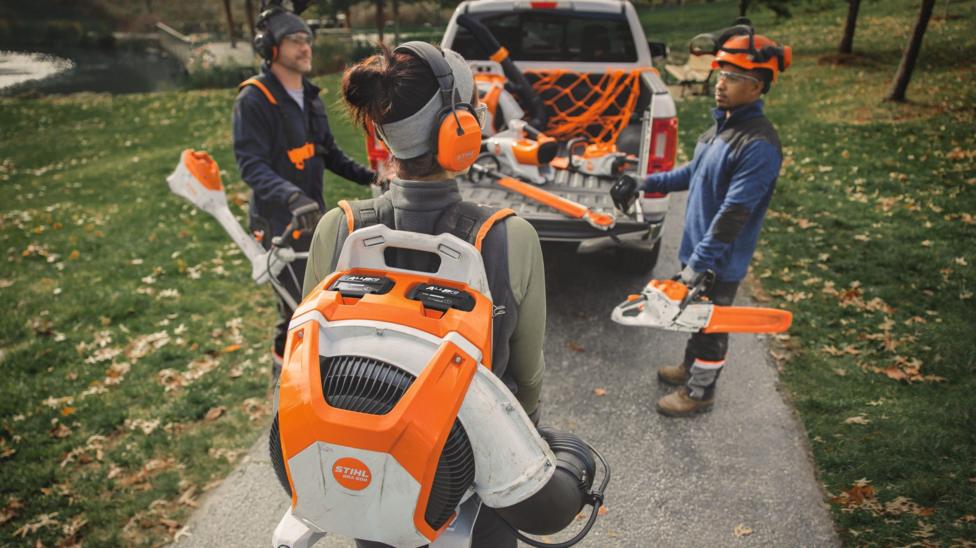
Cities across the US are increasingly banning petrol-powered landscaping tools in favor of electric alternatives, though professional landscapers face significant operational challenges.
Key facts
- •Cities are banning petrol landscaping tools to reduce noise, carbon emissions, and pollution.
- •Whisper Aero's handheld leaf blower features a battery that lasts up to 50 minutes at full power.
- •Professional landscapers cite high upfront costs and limited battery runtime as primary barriers to switching to electric tools.
- •Stihl aims for battery-powered equipment to make up 80% of its sales by 2035.
- •Stihl's new tabless battery cells are designed to charge faster and provide 60% more peak power than standard cells.
Cities in the US are increasingly restricting petrol-powered landscaping equipment due to noise and pollution concerns. While electric alternatives offer benefits such as reduced vibrations and emissions, the transition presents hurdles for professional landscapers regarding power, battery runtime, and equipment costs.
By the numbers
Innovation in Electric Tools
New companies are entering the landscaping market by applying aerospace technology to consumer tools. Whisper Aero, an aerospace start-up, has developed a handheld leaf blower using electric propulsion systems, which the company claims is quieter and more efficient than existing air-moving technology. The device features a battery that lasts up to 50 minutes at full power.
Challenges for Professional Landscapers
Professional landscapers often prefer petrol-powered equipment because it offers higher blowing force and longer runtimes. Carlos Camarena, a supervisor for a California landscaping firm, notes that his company uses electric tools only where required by local ordinances. Transitioning an entire business to electric equipment can cost approximately $10,000, and current battery runtimes often require crews to manage multiple charging units throughout the workday.
Industry Shifts and Future Targets
Major power tool manufacturers are investing heavily in battery technology. Stihl, based in Germany, aims for battery-powered equipment to account for 80% of its sales by 2035. To support this, the company opened a dedicated battery and tool manufacturing plant in Romania in 2025 and recently introduced a battery system using 'tabless' cells, which the company claims provide 60% more peak power than standard cells.
Advertisement
This article was independently rewritten by ManyPress editorial AI from reporting originally published by BBC Technology.