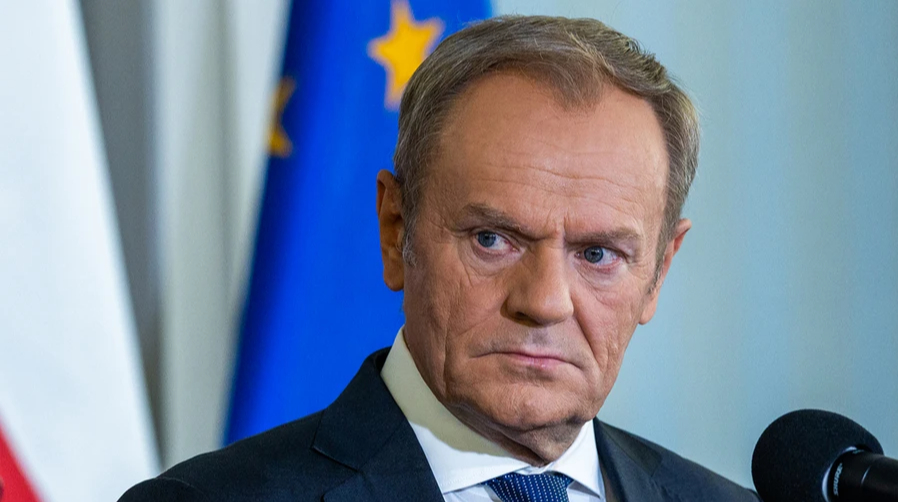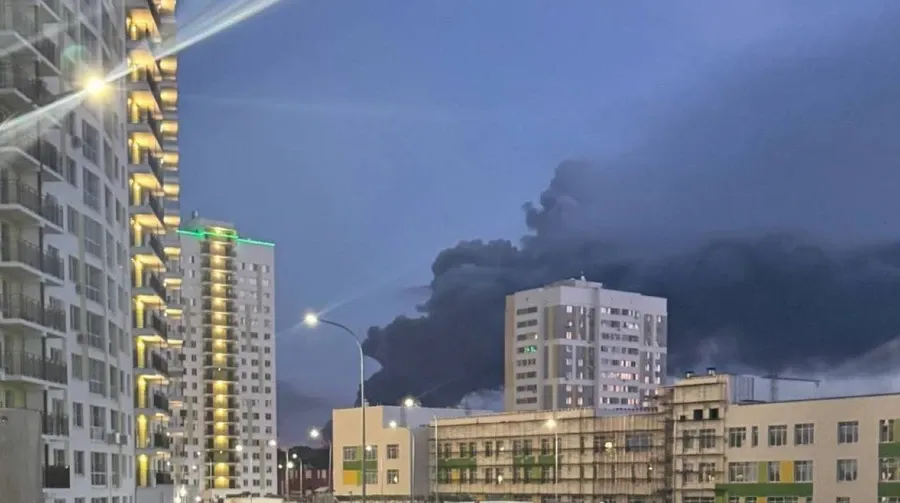
Polish Prime Minister Donald Tusk convened an emergency meeting after a Russian missile briefly entered Polish airspace during an overnight assault on Ukraine.

Key facts
- •The missile crashed in an uninhabited area of Poland after being launched during Russia’s overnight strikes on Ukraine.
- •At least nine people were killed and more than 50 were wounded in the Russian assault on Kyiv and Lviv.
- •Poland has planned a $2.3 billion anti-drone fortification system to counter recurring airspace incursions.
- •Ukrainian President Volodymyr Zelensky stated that Ukraine’s stockpiles of air defense interceptors are nearly depleted.
- •U.S. President Donald Trump agreed to allow Ukraine to produce its own Patriot missiles but declined to deliver additional units immediately.
Polish Prime Minister Donald Tusk held an emergency meeting on Thursday following an overnight missile incursion into Poland. Experts identified the projectile as a Russian Kh-101 missile launched during strikes on Ukraine. While the missile crashed in an uninhabited area and caused no direct threat, NATO jets had scrambled to intercept it.
By the numbers
Regional Impact and Official Responses
The overnight Russian operation targeted Kyiv and Lviv, resulting in at least nine deaths and over 50 injuries. NATO Secretary-General Mark Rutte condemned the incident as a reckless act, while Ukrainian Foreign Minister Andrii Sybiha stated the event highlights the urgent need to strengthen Ukraine’s air defenses. Polish officials indicated the incursion was likely not a purposeful strike on Poland.
Calls for Increased Military Aid
Ukrainian President Volodymyr Zelensky cited the incident to call for additional military support, noting that delays in receiving anti-ballistic missiles contribute to destruction and casualties. Zelensky previously requested an emergency 'winter package' of Patriot interceptors from U.S. President Donald Trump. While Trump agreed to license the production of Patriot missiles in Ukraine, he ruled out delivering more units while manufacturing capabilities are being established.
History of Airspace Incursions
NATO members have reported multiple instances of stray missiles, drones, and aircraft entering their airspace over the past year, affecting countries including Estonia, Germany, Latvia, Lithuania, and Romania. In response to these risks, Poland has unveiled plans for a roughly $2.3 billion anti-drone fortification system, following a proposal by European Commission President Ursula von der Leyen to create a broader drone wall.
Advertisement
This article was independently rewritten by ManyPress editorial AI from reporting originally published by Foreign Policy.