
Russian missile and drone strikes on port infrastructure have reduced Ukraine's seaborne exports by 98 percent, threatening significant economic losses.
Key facts
- •Seaborne exports from Odesa have been reduced by 98 percent due to Russian attacks.
- •Russia conducted at least 56 attacks on the Odesa region in July alone.
- •The National Bank of Ukraine estimates a potential $2.5 billion loss in export revenue for the second half of the year.
- •Russian forces gained 88 square kilometers of territory in July.
- •Russia is increasingly utilizing the Banderol missile, a weapon unveiled last year.
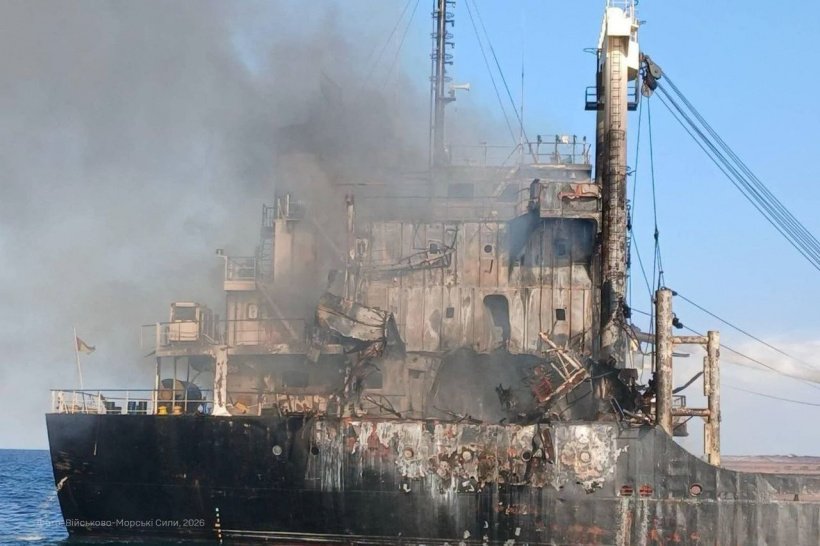
Russia has effectively halted nearly all of Ukraine's seaborne grain exports following a surge in attacks on the Odesa port region. The campaign, which has damaged at least 20 ships or port facilities, is being bolstered by the large-scale deployment of a new missile system known as the Banderol.
By the numbers
Economic Impact of Port Disruptions
The disruption of maritime logistics poses a substantial threat to the Ukrainian economy, as 60 percent of the country's imports and exports typically transit through the sea. National Bank of Ukraine governor Andriy Pyshnyy stated that continued shelling could result in a $2.5 billion loss in export revenue during the second half of the year, representing 0.9 percent of the nation's annual GDP.
Military Developments in July
In July, Russia launched a record number of ballistic missiles at Ukraine, though the use of long-range drones has declined. While Russian forces gained 88 square kilometers of territory during the month, Ukrainian forces are currently downing Russian aircraft at a rate of two to one. Recent Russian strikes have also targeted inland infrastructure, including a bridge in Sloviansk and a residential area in Pavlohrad.
Advertisement
This article was independently rewritten by ManyPress editorial AI from reporting originally published by EUobserver.