
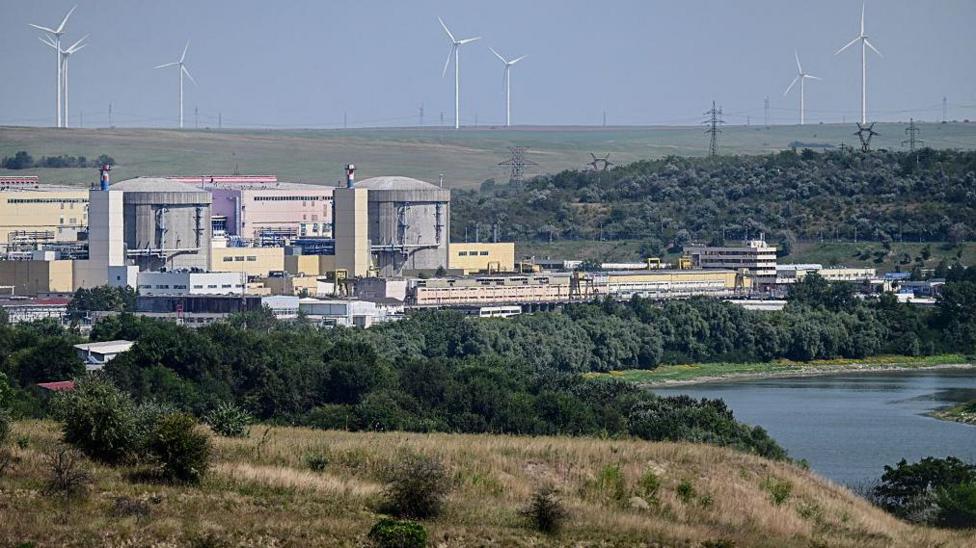
Romania has disconnected its final operational nuclear reactor at the Cernavodă plant as record-low water levels in the Danube River hinder essential cooling operations.
Key facts
- •The Cernavodă nuclear plant's second reactor was shut down in a controlled manner at 10:53 a.m. on Thursday.
- •The two reactors at Cernavodă typically supply about 20% of Romania's total electricity.
- •Plant director Romeo Urjan stated that a restart is not expected within the next 10 days due to forecasts of continued low water levels.
- •This marks the first time since 2003 that drought has forced a reactor at the Cernavodă facility offline.
- •Satellite data from the Copernicus climate service indicates the Danube has shrunk significantly compared to last summer.
Romania has shut down the second and final reactor at its Cernavodă nuclear power station due to extremely low water levels in the Danube River. The plant, which provides approximately 20% of the country's electricity, disconnected its second unit on Thursday morning. Officials do not expect to restart the reactor within the next 10 days as drought conditions across Europe continue to impact river flows.
By the numbers
Operational Impact and Grid Stability
The Cernavodă plant’s first reactor was previously taken offline on July 28. Following the shutdown of the second unit, which accounts for roughly 10% of national production, the Romanian government stated that the national electricity grid remains stable. To manage the shortfall, authorities plan to rely on a combination of energy imports, wind, coal, and reserve power generation. Hydropower capacity, while significant in Romania, has also been reduced by the same low river levels affecting the nuclear facility.
Drought Conditions and Mitigation Efforts
The Danube has reached its lowest levels in 30 years in several countries, with record lows reported in both Romania and Hungary. Before the full shutdown, Romanian authorities attempted to maintain water flow to the plant’s cooling pumps by sinking barges loaded with rocks and performing emergency dredging. In Hungary, officials are working to keep the Paks nuclear plant operational, with the Prime Minister ordering the construction of a riverbed barrier to ensure water reaches the facility's intake nozzles.
Timeline
- July 28The first reactor at the Cernavodă plant was shut down.
- Tuesday eveningPlant director Romeo Urjan stated that a restart of the second unit was not expected within 10 days.
- WednesdayHungarian Prime Minister Péter Magyar ordered the construction of a riverbed barrier to protect the Paks nuclear plant.
- ThursdayThe second reactor at Cernavodă was disconnected from the grid.
Advertisement
This article was independently rewritten by ManyPress editorial AI from reporting originally published by BBC World, Politico Europe.