
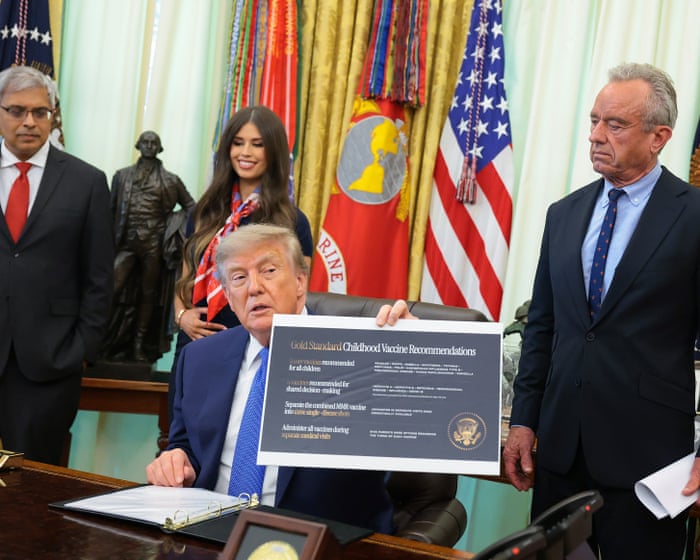
A new executive order directs that childhood vaccines be administered as single-disease shots and mandates separate medical visits for immunizations.
Key facts
- •The 2013 Institute of Medicine review of the American vaccine schedule found no safety signal or evidence to support spreading out doses.
- •A 2019 study of 657,461 Danish children and a recent study of 2.56 million American children found no association between the MMR vaccine and autism.
- •Hepatitis B vaccination in the first hours of life prevents approximately 75% of transmission from infected mothers to infants.
- •Universal RSV immunization, introduced in 2023, reduced infant hospitalizations for the virus by about 43% in its first season.
- •Current vaccine exemption rates have reached a record high of 3.6%.
President Trump signed an executive order on Monday directing that the measles, mumps and rubella (MMR) vaccine be administered as three separate shots. The order further instructs that, to the maximum extent feasible, all childhood immunizations should be provided during separate medical visits. The president stated the decision was based on his personal feelings regarding the vaccine schedule.
By the numbers
Changes to Immunization Recommendations
The executive order reduces the number of diseases for which children are recommended to be protected from 18 to 11. Seven diseases, including hepatitis A, hepatitis B, rotavirus, influenza, Covid-19, meningococcal disease, and RSV, have been removed from the standard recommendation list or moved to a category of shared clinical decision-making. The White House fact sheet cited an increase in recommended vaccine doses from 23 in 1980 to 84 by 2024 as the basis for the change.
Implementation and Availability Challenges
The order acknowledges that the directive to split vaccines cannot currently be implemented, as single-disease products are not domestically available. Merck, which previously produced such vaccines, ceased manufacturing them in 2008 and informed federal advisers in 2009 that it would not resume production. Experts note that restoring these products would take years and that requiring multiple medical visits could create significant barriers for low-income families and those without reliable transportation or paid leave.
Legal and Public Health Implications
While school entry requirements are governed by state law, Section 4 of the executive order directs the attorney general to pursue legal action against state laws that conflict with federal mandates regarding religious and medical exemptions. Public health data indicates that kindergarten MMR coverage currently stands at 92.5%, which is below the 95% threshold required to interrupt disease transmission. Measles cases in the U.S. have reached their highest levels in 35 years.
Advertisement
This article was independently rewritten by ManyPress editorial AI from reporting originally published by The Guardian Health.