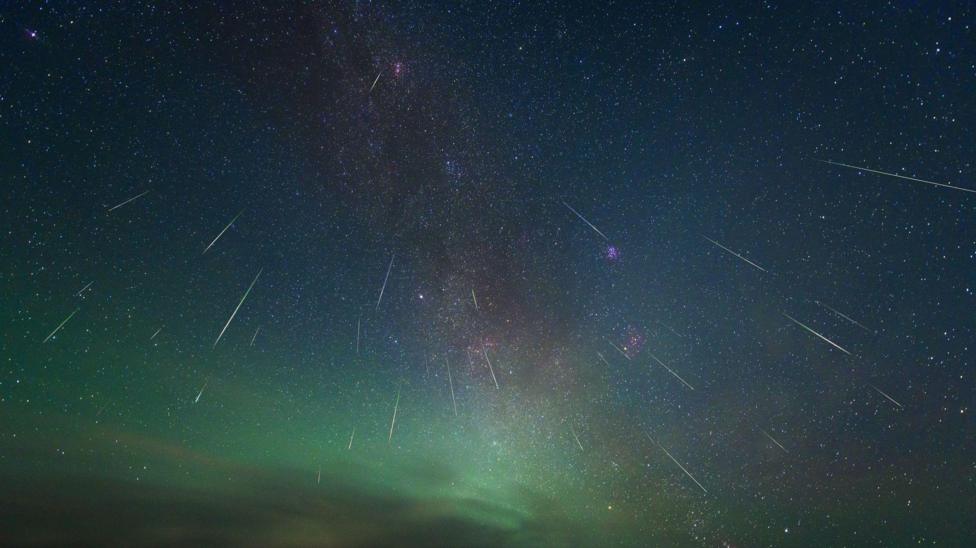
The annual Perseid meteor shower is active from July 17 to August 24, with peak viewing conditions expected overnight on August 12-13.
Key facts
- •The Perseid shower occurs as Earth passes through debris from Comet 109P/Swift-Tuttle.
- •The shower is active from July 17 to August 24.
- •Peak activity is expected overnight on August 12-13, coinciding with a new Moon.
- •Observers may see up to 150 meteors per hour during the peak.
- •The meteors appear to originate from the constellation of Perseus.
The Perseid meteor shower, known for being one of the year's most active and brightest, is currently underway. Earth is passing through debris left by Comet 109P/Swift-Tuttle, creating visible streaks of light as particles vaporize in the atmosphere. The event runs from July 17 through August 24, with the peak activity occurring overnight on August 12-13.
Viewing the Meteor Shower
During the peak, observers may see up to 150 meteors per hour, including bright "fireball" meteors. The shower appears to originate from the constellation of Perseus. Experts recommend looking for meteors in the northern hemisphere between midnight and one hour before sunrise. No specialized equipment like telescopes or binoculars is required, though dark, clear skies away from light pollution provide the best viewing conditions. Eyes typically require about 15 minutes to adapt to the darkness.
Weather and Visibility
Viewing success depends on local weather and cloud cover. High pressure is expected to bring dry conditions to many areas, though northerly winds may bring cloud cover to northern Scotland and eastern coasts in the coming days. Clearer skies are expected in the south and west, with conditions in eastern Scotland and England likely to improve during the second half of the week as winds ease.
Advertisement
This article was independently rewritten by ManyPress editorial AI from reporting originally published by BBC Science & Environment.