
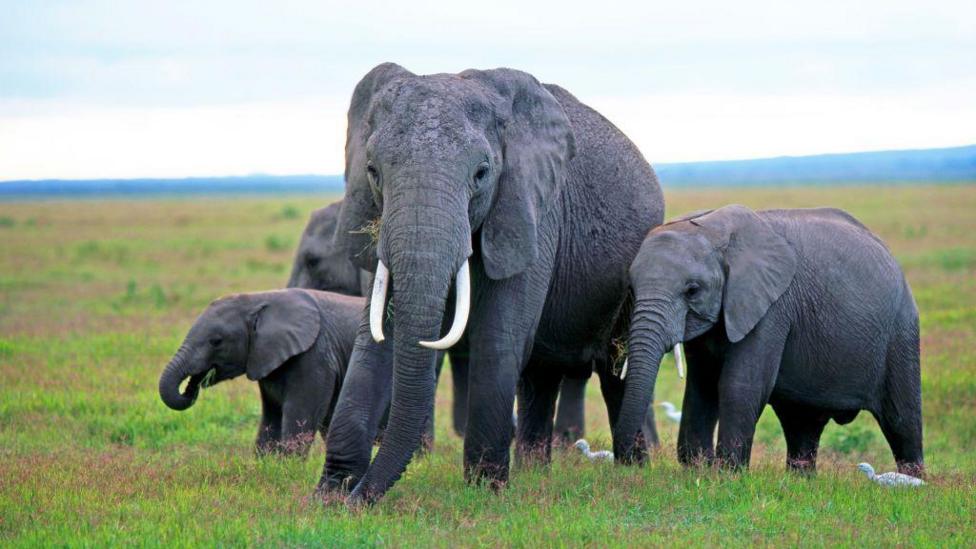
Authorities are investigating the deaths of 15 elephants in Kenya, with officials suggesting pesticide exposure while conservationists question the findings.
Key facts
- •The 15 elephant deaths occurred over a one-month period between 24 June and 24 July.
- •Kenya Wildlife Service tests identified traces of cyanide in the stomachs of the deceased elephants.
- •A 2024 report found that some farmers in the Kimana area use illegal, smuggled agrochemicals containing cyanide.
- •Conservationists argue the pesticide theory is inconsistent with elephant behavior, noting that mostly females and calves were affected.
- •Local farmers report significant financial losses due to elephants raiding crops like cabbages and tomatoes.
The Kenya Wildlife Service (KWS) is investigating the deaths of 15 elephants that occurred between June 24 and July 24 near Amboseli National Park. Officials reported that some of the deceased elephants exhibited signs of partial paralysis, and tests on stomach samples revealed traces of cyanide. The KWS is currently working under the theory that the animals may have been exposed to toxic pesticides used on nearby tomato farms in the Kimana area.
By the numbers
Conflicting Views on Cause of Death
While the KWS has not ruled out deliberate poisoning, Dr. Isaac Lekolool, the service's chief vet, noted that the situation is unusual and difficult to diagnose. A 2024 report by the Kenyan initiative Route to Food identified that some farmers in the Kimana area have used illegal insecticides containing cyanide compounds, which are reportedly smuggled across the border from Tanzania. However, several conservationists and local landowners have expressed skepticism regarding the pesticide theory. Critics point out that only one of the 15 deceased elephants was an adult male, which contradicts typical farm-raiding behavior where males are more likely to take risks. Additionally, observers noted that other animals, such as zebras and antelopes that share the same grazing areas, have not been affected.
Growing Human-Wildlife Conflict
The Amboseli ecosystem, which supports more than 2,000 elephants, is experiencing increased pressure as human activity expands into corridors between Amboseli and Tsavo National Parks. Farmers in the Kimana area report frequent crop destruction by elephants and giraffes, leading to significant financial losses. Frank Pope, CEO of Save the Elephants, stated that the encroachment of farms and lodges into fertile land previously used by elephants is intensifying the conflict between local communities and wildlife.
Advertisement
This article was independently rewritten by ManyPress editorial AI from reporting originally published by BBC Science & Environment.


