
A powerful earthquake off the coast of Indonesia's Flores region has caused widespread damage, landslides, and at least 38 deaths.
Key facts
- •The U.S. Geological Survey recorded the earthquake at a depth of 10 kilometers with an epicenter 68 kilometers north-northwest of Ende.
- •Indonesia's Meteorology, Climatology and Geophysics Agency lifted a tsunami warning after monitoring showed no significant sea-level changes.
- •Reports on the Reok landslide casualties differ, with the National Disaster Management Agency citing 16 bodies recovered and the Maumere Search and Rescue Agency citing eight.
- •Police Chief Rudi Darmoko confirmed that landslides in Ende regency have severed the Trans-Flores highway.
- •Emergency response efforts are being hampered by widespread power outages and communication disruptions.
A magnitude 7.7 earthquake struck off the coast of Indonesia's Flores region early Saturday, resulting in at least 38 deaths and significant infrastructure damage. The quake, which occurred at 5:58 a.m. local time, triggered landslides and prompted a temporary tsunami warning that was later lifted. Emergency responders are currently working to reach affected areas across East Nusa Tenggara province, where power outages and blocked roads have complicated rescue efforts.
By the numbers
Casualties and Rescue Operations
The National Disaster Management Agency confirmed at least 38 fatalities, primarily in the Sikka, Manggarai, and East Manggarai regencies. Reports regarding injuries vary; the National Disaster Management Agency reported more than a dozen injured, while the Maumere Search and Rescue Agency cited six people hospitalized with severe injuries. Rescuers are also searching for two individuals reported missing following a landslide in the village of Reok. To support the response, authorities have deployed helicopters and a rescue vessel to navigate the region's challenging island geography.
Infrastructure and Communication Disruptions
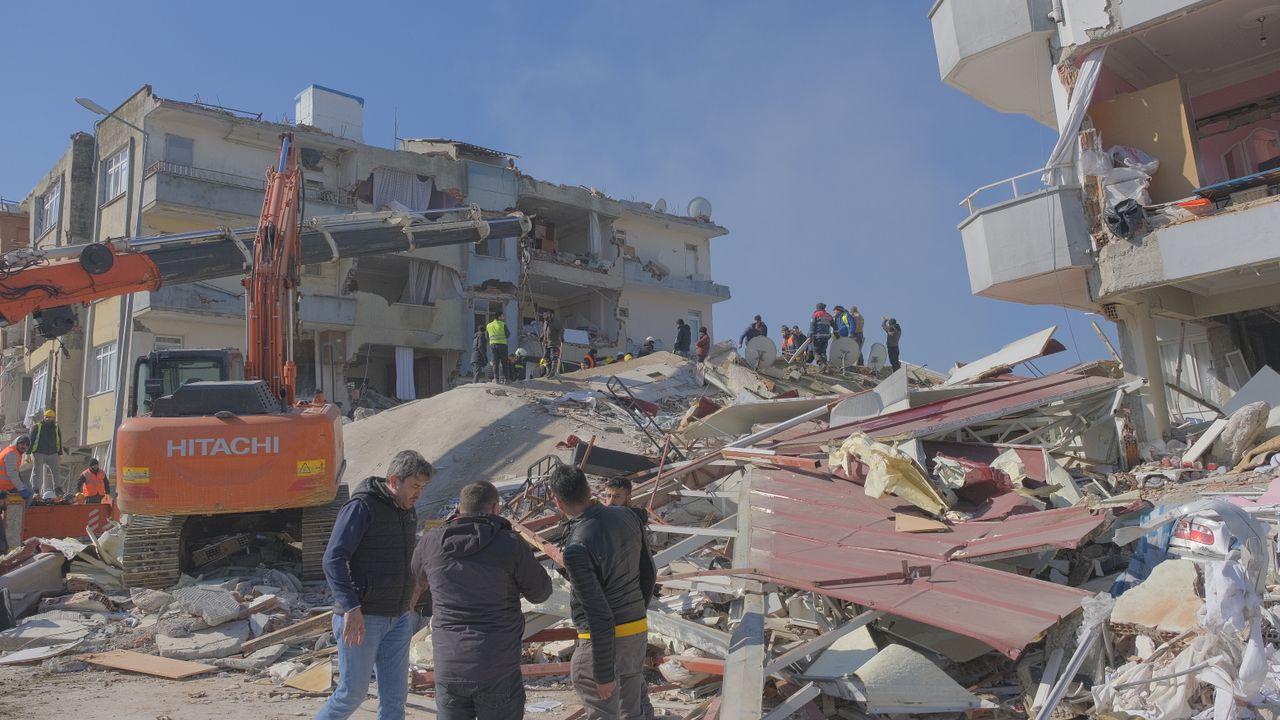
The earthquake caused widespread building collapses and severe damage throughout the region. Landslides triggered by the seismic activity blocked the Trans-Flores highway, a 700-kilometer mountain road connecting Labuan Bajo to Larantuka. Additionally, power outages in several cities and villages have disrupted communication, hindering the collection of damage reports. In Nagekeo regency, approximately 2,000 residents have fled to temporary shelters, while hospitals in the area have moved patients and equipment outdoors as a precautionary measure.
Advertisement
This article was independently rewritten by ManyPress editorial AI from reporting originally published by NPR World, Daily Sabah.