Iran's Supreme Leader Ayatollah Ali Khamenei was buried in Mashhad following his death on February 28, as his son Mojtaba Khamenei assumes leadership. The transition occurs amidst ongoing US and Iranian military exchanges and disruptions to shipping in the Strait of Hormuz.
Key facts
- •Ayatollah Ali Khamenei was buried in Mashhad, northeastern Iran, after six days of funeral events.
- •His son, Mojtaba Khamenei, is the new Supreme Leader but was absent from public view and mourning ceremonies.
- •Ali Khamenei was killed on February 28 during initial US and Israeli strikes against Iran.
- •The US reported hitting 90 Iranian military targets, including air defense systems, in recent strikes.
- •Iran reported 14 people killed in the past two days and launched retaliatory strikes on US assets in multiple countries.
- •Shipping traffic through the Strait of Hormuz has fallen significantly, from 70 to about 30 ships daily.
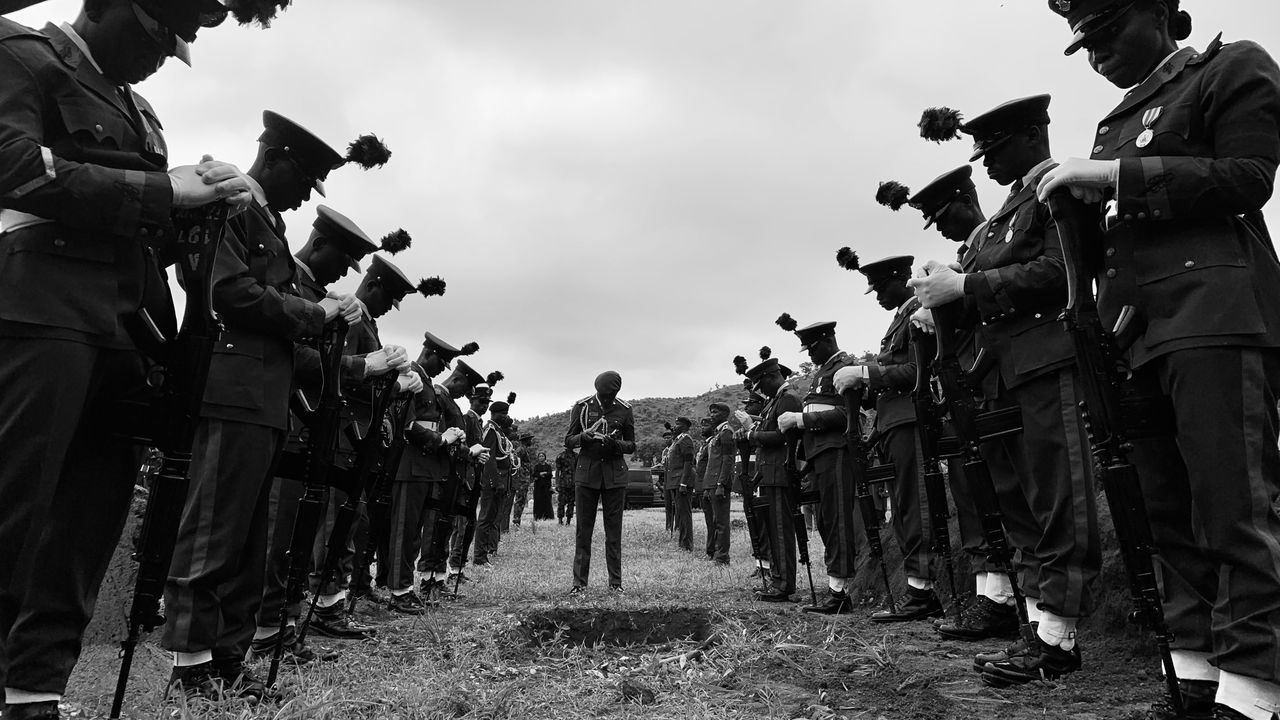
Ayatollah Ali Khamenei, Iran's Supreme Leader, was buried in his hometown of Mashhad on Thursday after six days of state mourning ceremonies. His son, Mojtaba Khamenei, has succeeded him as the Islamic Republic's third supreme leader, though he was absent from public view and official mourning events. This leadership change coincides with continued US and Iranian military strikes, which have impacted shipping through the Strait of Hormuz.
By the numbers
Leadership Transition and Institutional Shifts
The death of Ayatollah Ali Khamenei, who was killed on February 28 during US and Israeli strikes, marks a new political era for Iran. His son, Mojtaba Khamenei, remains out of public view after being disfigured in the US air strike that killed his father. Political analyst Reza Talebi noted that Ali Khamenei, during his nearly four decades in power, systematically reshaped Iran's power structures. This transformation diminished the influence of senior clerics and Shiite seminaries, while security institutions, the Office of the Supreme Leader, and associated networks gained dominance. Iran's elected institutions also saw their role altered, with presidential elections becoming contests within a pre-defined framework, limiting presidential maneuver in strategic areas. Notably, none of Iran's three former living presidents appeared alongside other political establishment figures during the mourning ceremonies; instead, official images highlighted security apparatus representatives and incumbent President Masoud Pezeshkian.
Escalating US-Iran Military Exchanges
The US and Iran continued to trade strikes into Thursday, with the US reporting it hit 90 military targets, some near the Strait of Hormuz, including air defense systems and military logistics infrastructure. Iran reported 14 people killed in the past two days and stated that targets near the Bushehr nuclear power plant were hit. In response, Iran said it targeted US assets in Kuwait, Bahrain, and Qatar, later launching more strikes on sites in Kuwait, Jordan, and Iraq. US Central Command (Centcom) stated its strikes aimed to degrade Iran's ability to attack commercial shipping in the vital waterway. Iran's parliamentary speaker, Mohammad Bagher Ghalibaf, warned that if the US strikes, it will be hit, adding that the Strait of Hormuz will open only under Iranian arrangements. The number of ships traveling through the Strait of Hormuz has dramatically dropped, with daily figures down from about 70 a week ago to approximately 30 ships, well below the normal 130 ships seen before the Iran war began earlier this year.
Timeline
- February 28Ayatollah Ali Khamenei was killed during the first hours of US and Israeli strikes against Iran.
- Past two daysIran reported 14 people killed in ongoing US and Iran strikes.
- ThursdayIranians prepared to bury Ayatollah Ali Khamenei in Mashhad.
- ThursdayThe US and Iran again traded strikes, with Iran launching more strikes on Kuwait, Jordan, and Iraq.
- Six daysFuneral events for Ali Khamenei concluded.
Advertisement
This article was independently rewritten by ManyPress editorial AI from reporting originally published by Deutsche Welle, BBC World.