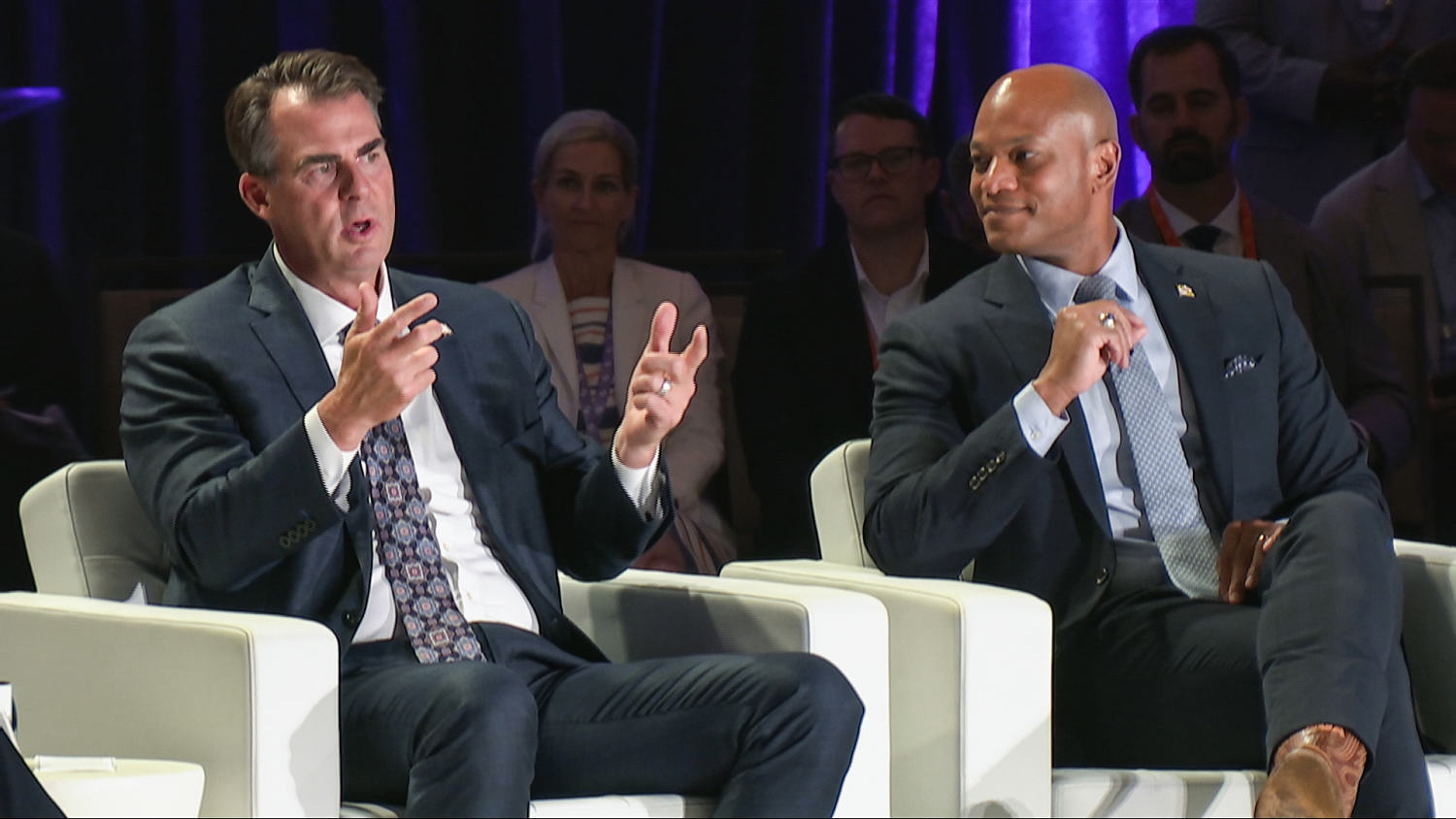
Governors Kevin Stitt and Wes Moore discussed the impact of partisan primaries and social media on political polarization at the National Governors Association meeting.
Key facts
- •The discussion took place at the National Governors Association summer meeting in Oklahoma City.
- •Governor Stitt argued that the most extreme candidate in a partisan primary is often the one who wins.
- •Governor Moore cited his ancestor, Prince Ames, as an example of someone who exemplified dignity.
- •Maryland is implementing policies to ban phones in K-12 schools and regulate AI-generated political ads.
- •Both governors advocated for more in-person connections to foster honest political discourse.
Oklahoma Governor Kevin Stitt and Maryland Governor Wes Moore addressed the state of American politics during a conversation at the National Governors Association summer meeting in Oklahoma City on Friday. Both governors argued that partisan primaries incentivize extremism and called for a return to dignity in government.
Impact of Primaries and Polarization
Stitt and Moore suggested that the current political system forces candidates to cater to the most extreme elements of their respective parties during primaries. Stitt noted that while he and Moore agree on approximately 90% of issues—such as education, infrastructure, healthcare, and the economy—the primary process creates pressure for candidates to avoid being outflanked by more extreme rivals. Moore stated that most Americans do not prioritize partisan labels and warned that those who focus on division will eventually find themselves isolated.
Social Media and Information Integrity
The governors identified social media as a significant contributor to societal polarization. Stitt remarked that the platform makes it easy to attack political opponents and noted that he personally avoids reading about himself online. Moore highlighted legislative efforts in Maryland to ban phones in K-12 schools during the day and to restrict AI-generated content in political advertisements. He expressed concern that people are increasingly seeking validation rather than education when consuming information.
Advertisement
This article was independently rewritten by ManyPress editorial AI from reporting originally published by NBC Politics.