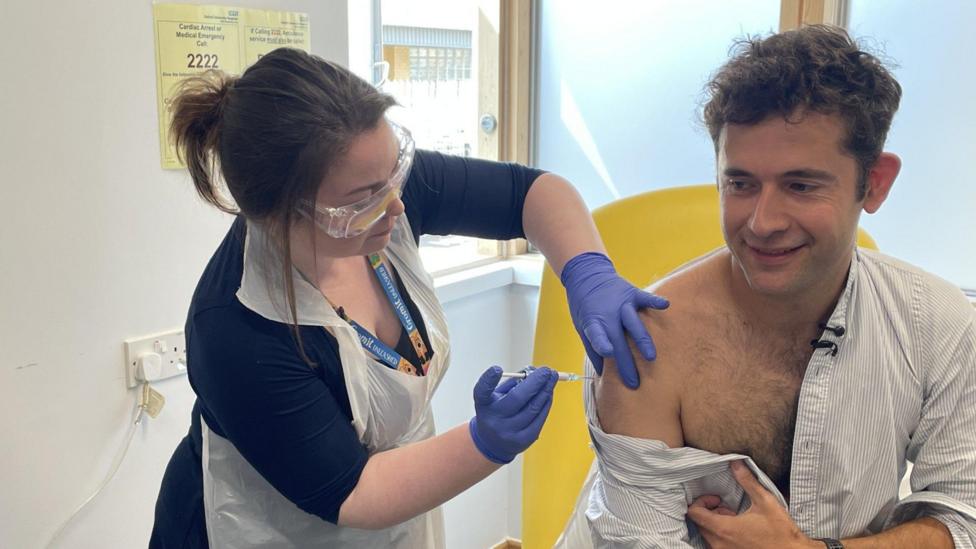
Researchers have administered the first dose of an experimental vaccine designed to target the Bundibugyo species of the Ebola virus.
Key facts
- •The phase one trial is testing for safety and immune response against the Bundibugyo species of Ebola.
- •This is the first of four vaccines in development for the Bundibugyo species to reach human trials.
- •The Serum Institute of India has manufactured 600,000 doses of the vaccine.
- •There have been more than 2,500 confirmed cases and over 1,000 deaths from Ebola in the DR Congo.
- •Future trials are scheduled to take place in Uganda and the DR Congo.
A team led by Professor Teresa Lambe at the University of Oxford has launched the first human clinical trial for an experimental Ebola vaccine. This phase one study aims to evaluate the safety of the vaccine and determine if it generates a strong immune response against the Bundibugyo species of the virus.
By the numbers
Vaccine development and goals
The vaccine was developed based on decades of research, allowing for a rapid creation process. While there is already a licensed vaccine for the Zaire species of Ebola, it is ineffective against the Bundibugyo species, which has triggered the current outbreak. Researchers confirmed that the vaccine cannot transmit Ebola to participants.
Future trials and manufacturing
Following this initial trial, the Oxford team plans to launch a second, smaller study in Uganda, followed by a larger efficacy study in the Democratic Republic of Congo. The Serum Institute of India has already produced 600,000 doses of the vaccine, which are prepared for use if the clinical trials prove successful.
Advertisement
This article was independently rewritten by ManyPress editorial AI from reporting originally published by BBC Health.