
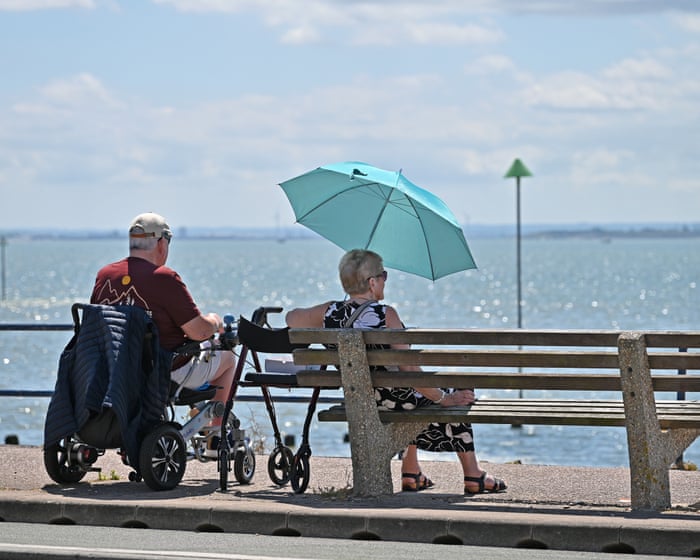
A study published in The Lancet Public Health finds that people aged 60 and over face dangerous heat stress at significantly lower temperatures than younger populations.
Key facts
- •Older adults are at risk of fatal heat stress at 1.5C of global warming, compared to 4C for younger adults.
- •Each additional degree of global heating exposes approximately one million more people to at least 180 hours of uncompensable heat stress annually.
- •The global population of people aged 60 and over is projected to double to 2.1 billion by 2050.
- •UK heatwaves in May and June 2026 resulted in 2,877 excess deaths.
- •Physiological changes in aging bodies, such as reduced sweating, limit the ability to stay cool during extreme heat.
Research led by Stanford University academics indicates that individuals aged 60 and older are vulnerable to uncompensable heat stress (UHS) at much lower temperatures than previously estimated. The study, published in The Lancet Public Health, highlights that older adults face higher risks of serious health complications, including heart attacks, as their bodies become less efficient at regulating temperature.
By the numbers
Vulnerability and Global Warming
The study notes that while younger adults may maintain heat balance at up to 4C of warming above preindustrial levels, older adults face fatal heat stress risks at just 1.5C. Factors such as reduced sweating, increased cardiovascular strain, and limited blood vessel dilation contribute to this heightened sensitivity. As the global population of those aged 60 and over is projected to reach 2.1 billion by 2050, researchers warn that heat-related health issues will rise, particularly in low- and middle-income nations like India and Pakistan.
Impact in the United Kingdom
The UK Health Security Agency reported that 2026 heatwaves in Britain led to 2,877 excess deaths during May and June, nearly double the 1,504 recorded in the summer of 2025. Medical experts, including representatives from the Royal College of Physicians, emphasized that extreme heat is a critical patient safety issue, noting that geriatric wards have reached temperatures as high as 36C during recent heatwaves.
Advertisement
This article was independently rewritten by ManyPress editorial AI from reporting originally published by The Guardian Health.