The price gap between dual-listed Chinese companies in mainland China and Hong Kong has widened to a near one-year high due to AI interest and state-backed support.
Key facts
- •Dual-listed mainland A shares are trading at an average 23 percent premium over Hong Kong H shares.
- •The Hang Seng gauge tracks the price differential for 202 dual-listed companies.
- •State-backed investment vehicles have been directed by Beijing to buy A shares.
- •Renewed interest in the AI sector has specifically benefited mainland tech hardware firms.
- •Hong Kong stocks have underperformed this year due to limited exposure to the AI supply chain.
The premium for dual-listed Chinese companies trading on mainland exchanges compared to their Hong Kong counterparts has reached a near one-year high. This trend is driven by state-backed investment in mainland A shares and a surge in investor enthusiasm for the artificial intelligence sector.
By the numbers
Market performance and price gap
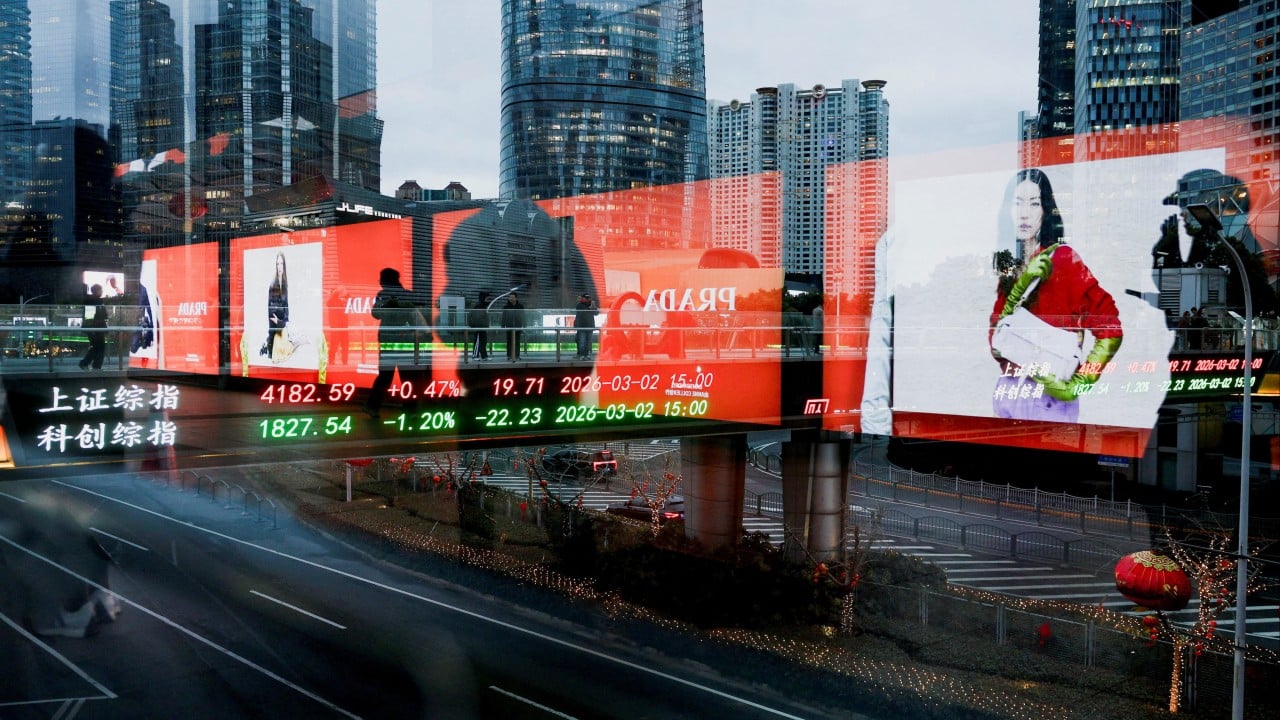
According to a Hang Seng gauge, the 202 dual-listed companies trading on mainland exchanges are currently averaging a 23 percent premium over their Hong Kong equivalents, known as H shares. This group includes major firms such as the Industrial and Commercial Bank of China and the electric vehicle battery manufacturer Contemporary Amperex Technology Limited (CATL).
Drivers of the divergence
The widening A-H premium is attributed to Beijing directing state-backed vehicles to purchase A shares to mitigate the impact of global sell-offs. Additionally, a revival in the AI sector has bolstered domestic tech hardware companies on the mainland. Conversely, the Hong Kong market has seen tepid performance, partly due to its limited exposure to the AI supply chain.
Advertisement
This article was independently rewritten by ManyPress editorial AI from reporting originally published by SCMP Business.