The Ballinderry Rivers Trust is working to manage giant hogweed, an invasive plant known for causing severe skin blistering, as Northern Ireland faces over 2,500 recorded sites.
Key facts
- •Giant hogweed can reach heights of up to five meters and is commonly found in damp areas like riverbanks.
- •The Ballinderry Rivers Trust has identified two water tributaries near Drum Manor Forest Park as primary sources of the plant's spread.
- •Northern Ireland has over 2,500 recorded sites of the invasive species.
- •The Northern Ireland Environment Agency is currently managing more than 500 enforcement cases regarding the plant.
- •Government targets aim to reduce the distribution of giant hogweed in Northern Ireland by 50% before 2030.
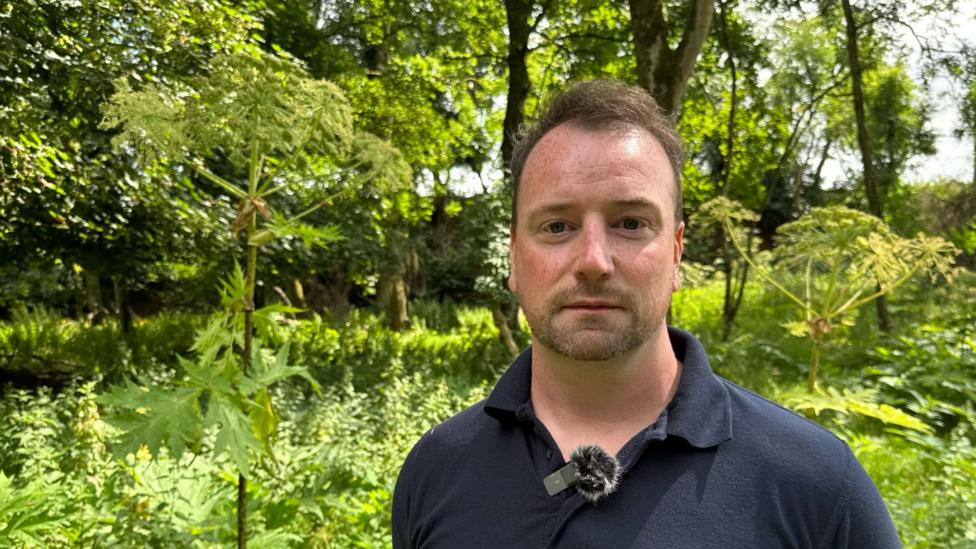
The Ballinderry Rivers Trust is working to control giant hogweed, an invasive species often called the UK's most dangerous plant, near Cookstown in County Tyrone. The plant, which can grow up to five meters tall, contains a sap that causes painful blisters and scarring when exposed to sunlight. Conservationists are currently focusing efforts on areas around Drum Manor Forest Park to prevent the plant from spreading further down the Ballinderry River toward Lough Neagh.
By the numbers
Health Risks and Public Awareness
Giant hogweed poses a significant health risk, as its sap reacts with sunlight to cause severe skin irritation and blistering. Symptoms typically appear within 24 hours of contact. Long-distance runner Esmée Gummer recently experienced these effects while in Northern Ireland, describing the pain as intense and fiery after being exposed to the plant in Scotland. Local angling club member Sean Devlin, who has fished the Ballinderry River for over 60 years, also reported suffering from large blisters on his arms after accidental contact as a youth.
Management and Enforcement Efforts
There are more than 2,500 recorded sites of giant hogweed across Northern Ireland. The Northern Ireland Environment Agency (NIEA) is currently pursuing more than 500 enforcement cases related to the plant. Stormont has established a target for landowners to reduce the distribution of the species by 50% by 2030. The NIEA encourages the public to report sightings via its official monitoring system or apps such as iRecord or iNaturalist, noting that each report is followed up to ensure landowners meet their management responsibilities.
Historical Context of the Species
Giant hogweed was introduced to Britain and Ireland in the early 19th century as an ornamental plant for stately homes. It eventually escaped into the wild and is now found in all counties of Northern Ireland, particularly along river corridors and lake margins. Government guidance for those who come into contact with the plant includes covering the affected skin immediately, washing the area with cold water, and avoiding further sun exposure.
Advertisement
This article was independently rewritten by ManyPress editorial AI from reporting originally published by BBC Science & Environment.