
China tests a satellite engine with a record-breaking operating life, outperforming US and European rivals.
Key facts
- •China has tested a satellite engine with a record-breaking operating life.
- •The engine can produce 750 newtons of thrust.
- •The engine fired for 11,617 seconds during its maiden flight in late June.
- •The engine operated continuously for over 14 hours during testing.
China has successfully tested a satellite engine with a record-breaking operating life. The engine, developed by the China Academy of Aerospace Propulsion Technology, can produce 750 newtons of thrust.
By the numbers
Engine Performance
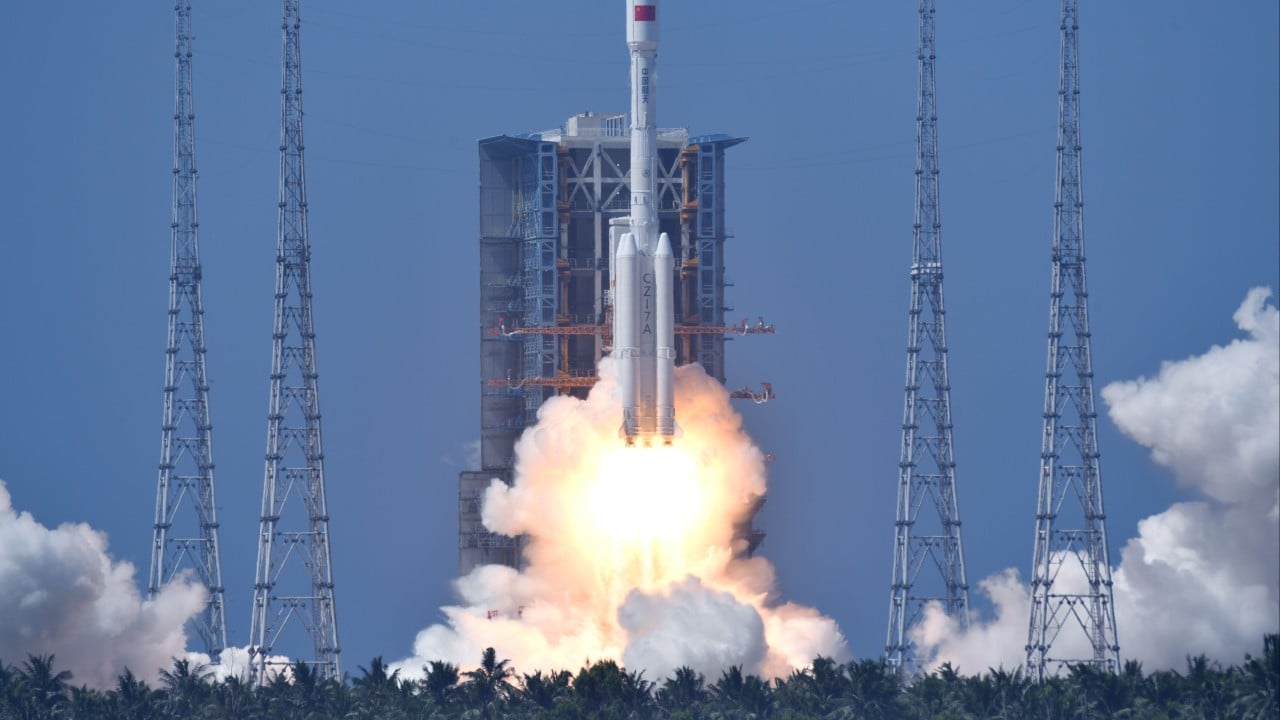
The Chinese engine fired for 11,617 seconds, or 3.2 hours, during its maiden flight in late June. It placed the Communications Technology Experiment Satellite 26A into orbit about 35,800km above Earth. The engine was designed to run for nearly 10 hours but operated continuously for over 14 hours during testing, thanks to a novel heat- and oxidation-resistant coating.
Comparison to Rivals
In contrast, leading engines currently used to raise spacecraft into their final orbit, including the US-made R-42DM and Europe's Leros-1B, are typically designed to operate for about seven hours. The extra operating time of the Chinese engine did not come at the expense of performance.
This article was independently rewritten by ManyPress editorial AI from reporting originally published by South China Morning Post.