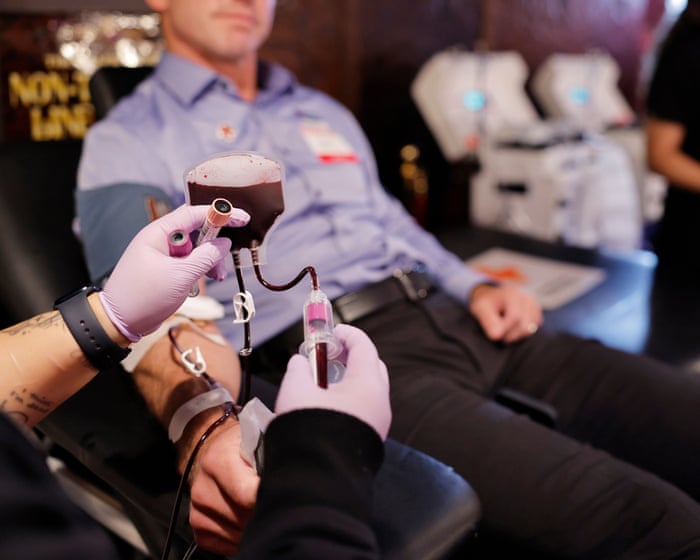
The American Red Cross has declared a national blood supply crisis as donations hit a four-year summer low.
Key facts
- •The American Red Cross has less than a one-day supply of type O positive blood.
- •Type O positive blood is used in 60% of the organization's distributions.
- •Only 3% of the 212 million people eligible to donate blood in the US do so annually.
- •The Red Cross states that three additional donors per blood drive could stabilize the current supply.
- •This is the second national blood crisis declared by the Red Cross, following an initial declaration in 2022.
The American Red Cross announced a national blood supply crisis on Monday, citing a four-year low in summer donations. As the largest provider of blood products in the United States, the organization currently holds less than a one-day supply of type O positive blood.
By the numbers
Factors Impacting Supply
The organization reports that blood donations are failing to keep pace with hospital demand, which typically increases during the summer trauma season. Contributing factors to the decline in donor turnout include extreme heat, poor air quality, and widespread foodborne illnesses, such as a cyclosporiasis outbreak suspected to have affected over 11,500 people.
Importance of Blood Types
Type O positive blood is the most commonly transfused type, accounting for approximately 60% of the organization's distributions and compatible with about 80% of patients. The Red Cross emphasizes that maintaining adequate supplies of A, B, and AB blood types is essential to preserve type O stocks for life-threatening emergencies where a patient's blood type cannot be immediately determined.
Broader Industry Concerns
The Red Cross is not alone in reporting shortages; the Association for the Advancement of Blood & Biotherapies recently stated that the national supply is significantly lower than required. Additionally, the Connecticut Blood Center and the provider Vitalant have both declared blood supply emergencies this month.
Advertisement
This article was independently rewritten by ManyPress editorial AI from reporting originally published by The Guardian Health.